Showing posts with label Kanazawa Tastes Good. Show all posts

Thursday, April 2, 2015

A pretty amazing lunch for just over $8.

I've been away for far too long, I know. I've missed innumerable chances to blog about food and travel during the last year-and-a-half I spent living in Vietnam. Last month, however, I moved with my Japanese girlfriend and two Vietnamese cats to Kanazawa, Japan, which a close friend from Nagoya swears has the best seafood in the entire country, and until I get insanely busy again I feel I ought to do the town's food and culture scenes justice by blogging as regularly as possible about both.

Having said this, it's rather ironic that I'm starting up again with a post about a Nepalese restaurant in Kanazawa. But that's fine. I just need some momentum, and the mood really struck me with force this afternoon. To be honest, I'm not sure why I'm restarting this now, as I take off in only one more week to do a two-month reading tour in the US and Canada for my recently published novel, Lotusland.


In any case, with the weather being rainy and extremely windy, we decided to stick close to home, which is in the Korinbo area of Kanazawa.

And it was so sunny and mild yesterday...

Just a two-minute walk from our apartment is Seseragidori, a narrow, meandering street known for its small boutique shops, cafes, restaurants and izakaya. In the mood for a lighter curry than most Japanese versions, we headed for Aashirwad, a Nepalese restaurant we've been to before.

I have no idea why more people weren't here for lunch. This is one of the city's better options for non-Japanese food, and the menu is as reasonably priced as anywhere. Colorful interior, too. I love the embroidered wall hangings. 


They offer several vegetarian options for lunch and dinner, and I settled quickly on a ¥1000 set lunch that included a huge slice of naan, three small bowls of curry – lentil, vegetable, and chicken – a small salad, a dollop of pickled onions, and two or three spoonfuls of yoghurt for dessert. My girlfriend opted for the vegetarian curry with naan and yoghurt, which was only ¥800.


The curries here, in addition to being inexpensive, are uniformly good. But they also have a rather uniform taste. In other words, there's not much difference in the curry bases used, or at least I didn't detect much difference. I didn't mind, however, as the curries were excellent, and thankfully not too spicy. (As in most curry restaurants, customers can request whatever level of spiciness they're comfortable with.) The naan was soft but not greasy, and the salad was a nice contrast in color as well as texture to the three curries, but the dressing was salty. There was nothing special about the yoghurt, though it was a nice way to polish off our lunch. I left the pickled onions untouched.


Aashirwad is easy to spot from the street with its colorful prayer flags strung over the canal from the shopfront to the sidewalk. It's very low-key, and the staff, who are Nepalese, are easygoing and friendly.

Aashirwad is open for lunch from 11:30 - 3:00 and for dinner from 18:00 - 22:00. They close on Mondays and on the first Tuesday of every month. Note that like many businesses in Japan they only accept cash.

Korinbo 2-12-15
Sakana-han Building, 1st floor
Kanazawa 920-0961

Tel 076-262-2170

Fax 076-262-2171 
Facebook www.facebook.com/aashirwad.kanazawa

Stumble Upon Toolbar

Friday, October 8, 2010

Some local and imported fun on Truc Bach


It’s Friday in Hanoi. Autumn has not yet come to Vietnam’s capital, and today was sunny and hot. Even though the weekend is on the city’s doorstep, it’s a weekend that’s sure to prove more stressful than other weekends here. Why? Because this is the final weekend (thankfully) of Hanoi’s 1000-year anniversary, a celebration stretching from the 1st through the 10th of October, which has resulted in some of the worst crowds and traffic I’ve ever seen in Vietnam. It’s so bad that I’m trying not to leave my neighborhood, especially in the evening, unless it’s absolutely necessary. So this blog post is one I’m doing of the immediate vicinity around my apartment.

If I squint, or better yet, if it’s a clear day, I can see Nguyen Buoi Street from my balcony. It’s one of the streets that peels off of Tran Vu Street, which circles around much of Truc Bach Lake. There are a couple of small eateries here I’ve come to frequent. One of them is a restaurant that specializes in goose (ngan). It’s not the best goose restaurant I’ve eaten at, but considering how close it is to where I live, I’m happy to come here on occasion. I’m partial to goose with mien noodles, so I always order that here. It comes topped with basil leaves, lemon leaves, bean sprouts, fried onions, and crushed peanuts, and, with a glass of iced tea, it’s a good deal for only 30,000 dong ($1.54) The people who run the restaurant are nice, too, and today I sat at a table with a friendly couple, one of whom was drinking beer and explained to me that beer makes his face turn red. In case I hadn’t understood, he pointed to the red sun-umbrella shading our tables, then pointed to his face, then pointed at his two empty beer bottles, and then laughed. And he was right. His face was red. It was a little scary, in fact.


After lunch I did a full walking loop around Truc Bach Lake, and, lucky me, soon found myself passing the corner of Truc Bach and Thanh Nien streets, which is chock full of ice cream businesses.


Café Số Một lured me with its promise of French ice cream – it certainly didn’t lure me with its architecture – and I stepped inside, seated myself on the second floor, then reseated myself on the third floor when I realized I could look out over the lake from there.


I ordered kem trái duà xiêm (39,000 dong / $2) – vanilla ice cream served in a young coconut and topped with crushed peanuts, candied fruit, dried coconut, and a cookie. It also comes with a complimentary glass of coconut juice, which is a nice touch.


For dinner we had some Japanese friends over. They were kind enough to bring a homemade dinner with them, and I provided refreshments: Tiger beer, Asahi beer, and two types of sake that I’d bought in Japan. I also got to use the sake cups I bought in Kanazawa, which was fun.


Upon returning to Vietnam two weeks ago I gave my Japanese friends some blowfish (fugu) eggs mixed with nukka (the brown husks of rice), and they brought this over, too.


The flavor was very strong and the texture surprising – on the whole, it was sort of like eating creamy blue cheese. But because the flavor was strong, the sake tasted that much better. I thought it might have a numbing effect, too, as fugu I’ve eaten before always has, but this one didn’t. In any case, my friend and I polished off about 1 1/2 bottles of sake, which I really didn’t feel, but I think he did because at one point he started yelling English obscenities from my balcony and at another point he began burning giant mosquito-like bugs on my couch with his cigarette lighter. (For the record, I condoned the former but not the latter…)


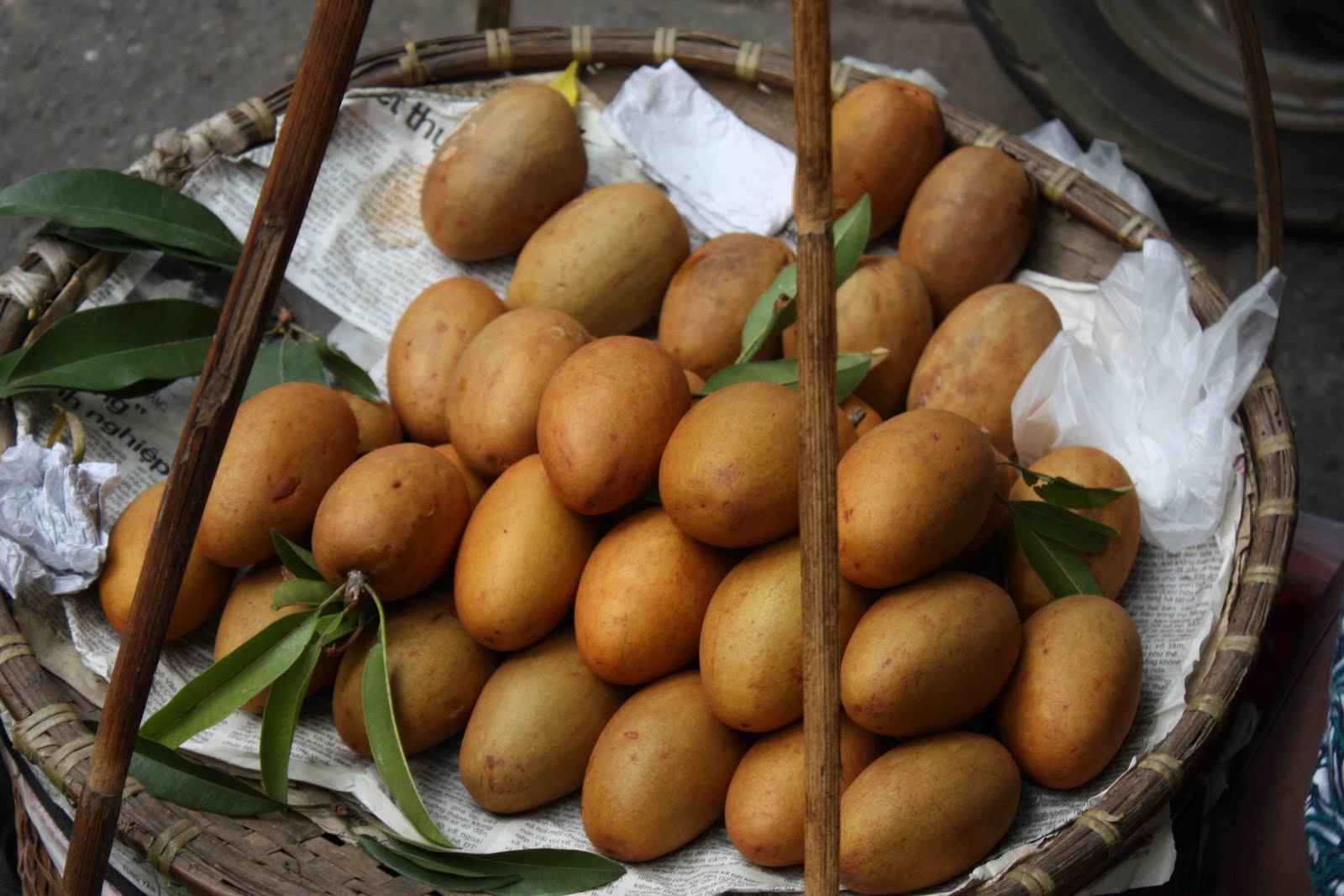
I’ve included two more photos, too, somewhat randomly. For anyone wondering what a sapuche is, it’s the fruit piled up in the basket in the photo below. In Vietnamese it’s often called hồng xiêm. Why do I use this name for my blog? Because I was half-addicted to this fruit when I lived in Bien Hoa 16 years ago and the name stuck in my mind. Somehow, though, I don't really like the fruit that much anymore...


Also, just in case people wonder if I ever eat American food in Vietnam, the answer is generally no…but not invariably no. Here’s a photo of two bacon cheeseburgers I made the other night.


Sometimes, I just have to have a good bacon cheeseburger (and these were good). Hey, am I alone in this? I didn't think so...

Stumble Upon Toolbar

Saturday, September 18, 2010

Kanazawa, Day 8


So, after a rather unglorious and unproductive time in Kobe I decided to go back to Kanazawa, if only to get a final look at the city and perhaps some idea of what I might do if I were to come back here again…perhaps more permanently, for example.


The train ride, the same one I took yesterday but in reverse, was notable only for the car’s higher occupancy and general busy-ness. The trip back felt longer than the trip to Kobe, probably because of this.

At about two o’clock, I decided I should probably eat something, even though, similar to the last few days, I didn’t have much of an appetite. A woman pushing a food and drinks cart went down the aisle, and I stopped her and paid ¥1090 ($12.89) for a block of rice with a layer of mackerel (saba) on top of it. It was surprisingly satisfying – the mackerel was that good – though it would have been nice to chase it down with something green, and I don’t just mean green tea.


I checked back into the poorly named Dormy Inn Hotel, which isn’t the least bit dormy, and immediately went upstairs to make use of the rotenburo. Afterward, I came back down to the check-in desk to ask if I might stay at extra day, since if I had to leave tomorrow I wouldn’t have much chance to see Kanazawa a final time. Unfortunately, the hotel was fully booked. I got on a waiting list, but they said they didn’t expect a room to become available, which sent off a loud internal “you’re such an idiot for not considering this possibility” bell.

But it wasn’t anything that a decent meal couldn’t take care of, I thought, and an hour or so later I decided to try to wash away this particular trouble at a restaurant two doors down from my hotel called Yarukichaya (Yaruki Teahouse, which is a bit of a misnomer).


I was given a “box room” – the name conjured a bad experience in a capsule hotel in Morioka fifteen years earlier, but the memory was short-lived, in part because the box room was about three times bigger than that capsule hotel, the room wasn’t fitted with a TV that only got porn, and outside the door weren’t businessmen staggering drunkenly and emitting vomiting sounds.


Ah, yes, let me get back to the food…

I was immediately given a complimentary starter of veggies in sticky, grated yam, which was refreshing after the long train ride, as well as a local brand of sake, which was not complimentary but was still refreshing in its own right. I had a long look at the menu, which was as usual in Japanese I could 50% understand, and ordered umeboshi ochazuke and buri daikon nimono (despite the waitress’s insistence that foreigners don’t generally like yellowtail served this way).


The ochazuke was very simple but delicious, and came with a slice of pickled radish and greens, along with a dollop of wasabi that I studiously avoided.


The buri and daikon came in a rich, brown, hearty sauce that I wasn’t expecting. It was almost smoky in flavor, and it was very different from the buri daikon nimono that I used to make in Hawaii. I ate all of it, but, as the waitress had suggested, I turned out not to be a huge fan of this. It wasn’t bad, but it wasn’t what I expected.


Overall, though, this place was very good. From what I could read of the menu there were a great many things I also would have liked to order, the prices were affordable (my dinner only cost ¥1440/$17.02), and the service was great. Very friendly, helpful people here!

Stumble Upon Toolbar

Wednesday, September 15, 2010

Kanazawa, Day 7


Feeling as though I’d seen most of the places I’d set out to see in Kanazawa, I decided to spend the morning and early afternoon walking around one of the temple districts.

I took the tourist bus, which was one of the best friends I made in Kanazawa, to stop number 12, backtracked a bit to Sakura Bashi Bridge, and crossed it.

I immediately came upon a small children’s park on a fairly quiet road to the side, and from there I climbed a stone stairs to an overlook above the Saigawa River.


It was fragrant of flowers here, and I bent over to one and snapped a quick photo.

I'm not sure what kind of flower this was, but it filled the air with its perfume.

I continued walking along the path that connected the stairs to the Teramachi temple district, which extends several blocks over what is otherwise a residential section. There are a number of temples here, the majority of which are quite small and either completely unmarked or with information inscribed in Japanese.


I visited quite a few of the temples, turning down odd alleys now and then to see if they led anywhere special (they didn’t; they just led me to dead-ends or roads farther from where I wanted to be).


One of the temples I was looking for was Shogetsuji Temple. While I didn’t try to get inside the temple itself, as it was being used for some event and didn’t look particularly inviting from the outside anyway, I did find interesting its collection of stone statues, called jizo in Japanese.


Jizo are bodhisattva figures that offer protection to women, children, and travelers. Those that are decorated with hats, bibs, and other child-related accoutrements are often the work of parents who have lost children or whose children have survived some serious illness.


As you can see in the first jizo photo, there is also an altar here where people can offer prayers and burn incense.

After completing my walk of the Teramachi temple district's main road, I made a left turn shortly before the Saigawa Ohashi Bridge. I soon came across several more temples, the main attraction, and the most interesting of the temples I found in the district, being Myoryuji Temple.


This temple was built in 1643 and once served in part as a samurai hideout. A tour (in Japanese) of the temple’s interior costs ¥800 ($9.63); inside one can see an interior designed to thwart anyone (predominantly ninjas, apparently) unfamiliar with its hidden doors and stairways, secret rooms and tunnels, etc.


Although the temple grounds were small, I found them very explorable and was even invited inside the main hall for free.


There are a number of smaller structures surrounding the main building, which are worth sticking one’s head into and looking around.


From the northern edge of the Teramachi Temple area, I was within easy walking distance of Naga-machi Buke Yashiki district – the old samurai enclave, in other words. I’d visited here previously but had missed the Nomura-ke House, an old samurai home, so I thought I’d make a quick stop to check it out. It was about a 10-15 minute walk, and once I’d entered the old samurai enclave I was stopped on the sidewalk by a fast-talking man trying to get me to go inside some museum that didn’t look very interesting to me. When he asked where I was going I told him, but then he tried to convince me that there were no old samurai houses in Kanazawa. Then he tried to sell me a ticket once more to his museum. Confused but determined to find what I was sure existed, I told him no, walked about fifty more meters, and came across what I’d just been told couldn’t be found in Kanazawa.


I paid ¥500 ($6) to enter, and was greeted, in a manner of speaking, by the samurai outfit pictured below.


This house is definitely worth a visit, though it’s probably better to go, as I did, when there are very few other tourists around. The reason I say this is that the house is small and the rooms and corridors a bit cramped – the house is only a portion of its original size, apparently – and having fewer people around makes it easier to appreciate the peaceful gardens the house contains.


I walked back to my hotel from here – I could have taken a bus, but the walk back is pretty easy, though it did take about thirty or forty minutes. In an effort to save money I opted for a sad little lunch – a packaged sandwich (fried egg, fried pork, and tuna fish) and a bottle of milk tea.


I took it to a giant brass teapot sculpture called yakan tento suru, by Kazumasa Saegusa, outside of Kanazawa Station and ate my lunch there.


Not surprisingly, I was left completely unsatisfied with this “meal,” and as I was trudging through the department store between the station and my hotel, I stopped at a place called nana’s green tea. The menu here is amazing. (Seriously, click on the link, then double-click it to enlarge the photos on the menu.) I’ve never seen so many interesting items made with green tea.


I ended up ordering a green tea latte with mochi, sweet red beans, and whipped cream. It wasn’t as good as it looked – it was bitter and a bit grainy for my tastes, and although I could have added sugar to make it more palatable, I refuse to add sugar to any green tea.


When I got back to my hotel, it was time for a bath. And not the decent bath digs I had in my room, either, but the rotenburo bath on the top floor of the hotel. $63 a night is already a good price for a hotel in Japan, but with a great breakfast buffet and a beautiful indoor and outdoor rotenburo thrown in, this is an outstanding deal. A rotenburo works very much like an onsen does – you enter with a small towel from your room, store your clothes in a small locker, and head first to the bathing area to soap down and rinse very thoroughly.


Once you’re squeaky clean, it’s time to brave the near-blistering hot bath, of which my hotel had two. There’s also a cold bath (which I could only manage to enter to my knees, and even then I thought the cold might give me a heart attack) and sauna, but I much preferred the hot water (don’t immerse your towel in the water, though, since that might result in detergent residue making the water impure).


The outdoor bath was particularly nice, especially at night when the moon is overhead. There was a wind chime outside, which tinkled constantly in the breeze that circled about.


That night, in another misguided effort to save money, and because I wasn’t feeling very hungry, I decided to buy dinner, if I can use the term, at a Lawson’s store not far from Kanazawa station. As you can see, I wasn’t hurting for pre-made meal choices.


Not wanting anything to do with pre-boiled pasta, I opted for pre-steamed rice and pre-tempura-fried shrimp and veggies. I took it home, where I found it to be about as cold and soggy as I could stand. I still ate it.


I probably shouldn’t have, however, as that night I felt terrible and didn’t feel much better in the morning, either. But hey, it was “cheap” (about ¥600, or ~$7), and I might have learned a lesson out of having two convenience store meals in a single day...

Stumble Upon Toolbar